






BKBIET Pilani Hosts Knowledge Sharing Session on Securing the Digital Future
Roadmap for Cybersecurity Education and Talent Development.
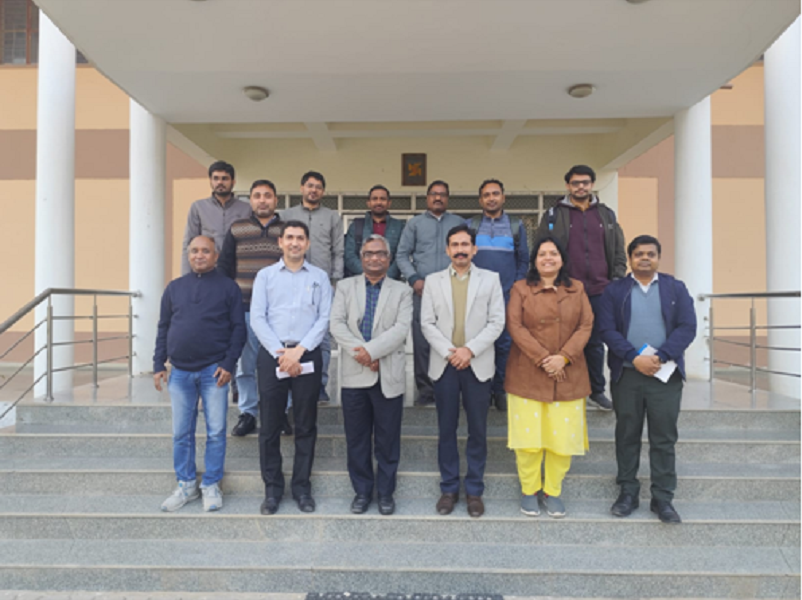
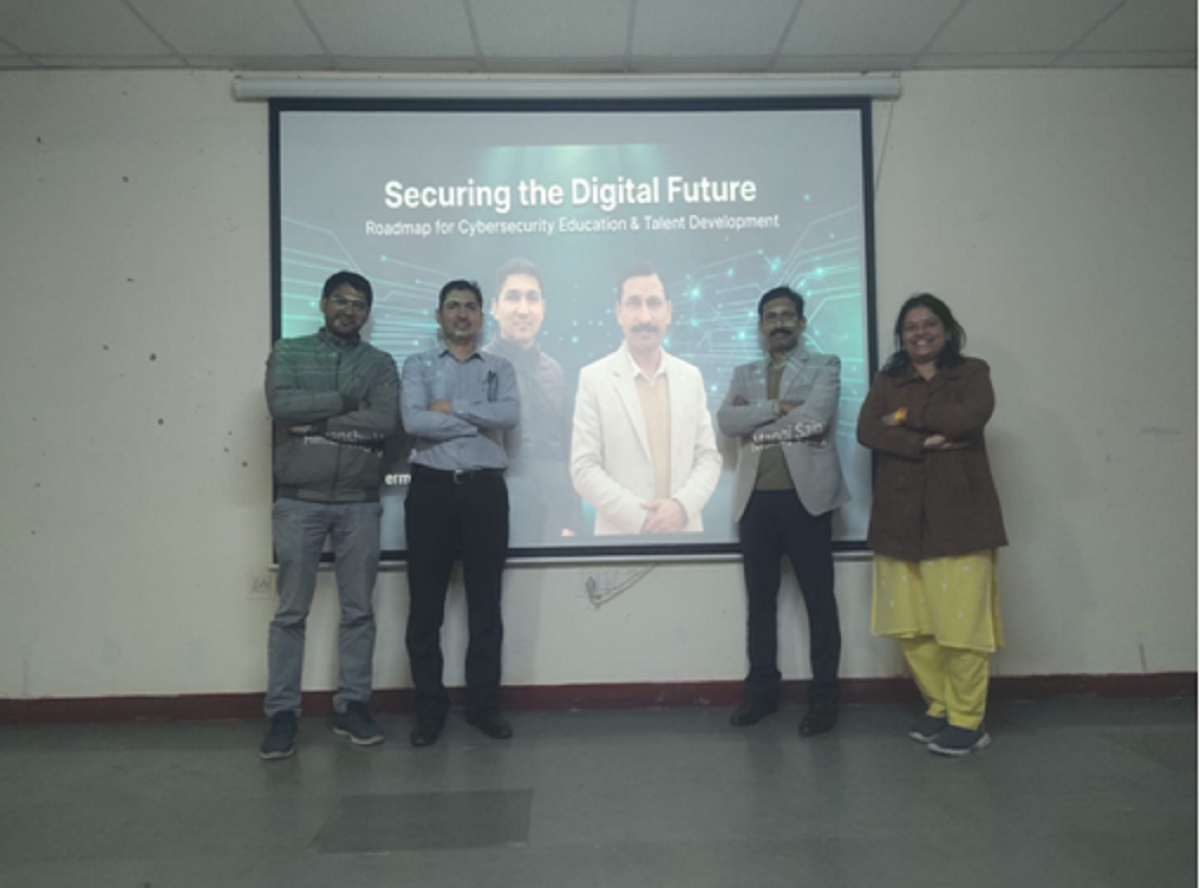
The Research, Consultancy, MoUs and Industrial Interaction Committee of B. K. Birla Institute of Engineering and Technology, Pilani, successfully organized an Knowledge Sharing Session on the theme “Securing the Digital Future: Roadmap for Cybersecurity Education and Talent Development” on 10 February 2026 at 4:15 PM in BPTRC Hall 1. The program was organized under the supervision of Dr. Smita Pareekh, PIC, Research & Consultancy Department, and efficiently managed by Dr. Rajeev Kumar and Dr. Manoj Bhatt.
The event was conducted with the objective of enhancing cybersecurity awareness, strengthening academic and industry collaboration, and sensitizing faculty members about emerging cyber threats and digital safety in the rapidly evolving technological environment. The session was attended by faculty members from various departments who actively participated in discussions related to cybersecurity education, cybercrime awareness, and the need for digital ethics.
The program commenced with a welcome address by Dr. Rajeev Kumar, who greeted all the faculty members on behalf of the Research, Consultancy, MoUs and Industrial Interaction Committee. He highlighted the relevance of cybersecurity in today’s digital ecosystem and emphasized that academic institutions have a significant responsibility in preparing both students and society for the challenges of cyber threats. He also acknowledged the valuable presence of the expert speakers and expressed confidence that their insights would benefit the institute’s academic and outreach initiatives.
The keynote session was delivered by Mr. Himanshu Verma and Mr. Manoj Kumar Saini, both Assistant Professors from the Department of Computer Science Engineering. The knowledge sharing session was structured into two complementary parts, where each speaker addressed specific aspects of cybersecurity education, awareness, and infrastructure development.
Session by Mr. Himanshu Verma
The first part of the knowledge sharing session was delivered by Mr. Himanshu Verma, who focused on the role of educational institutions and industry in strengthening cybersecurity awareness and skill development. His presentation covered the following three major aspects:
1. Public Awareness Campaigns and Academic Outreach
Mr. Verma emphasized that engineering colleges play a crucial role in spreading cybersecurity awareness beyond the classroom. He explained that institutions must organize regular workshops, seminars, and public lectures for students, parents, and local communities. These initiatives help people understand:
- Safe internet practices
- Phishing and fraud detection
- Password security
- Data privacy and online behavior
He stressed that industry collaboration is essential in these campaigns, as industry experts can provide real-life case studies and demonstrate the practical consequences of cyber negligence.
2. Industry–Academia Certification and Skill Programs
Mr. Verma highlighted the importance of certification programs and short-term training courses jointly offered by engineering colleges and IT industries. According to him, these programs should be designed to bridge the gap between theory and practice by incorporating:
- Hands-on labs
- Industry-standard tools
- Real cyber-attack simulations
He pointed out that such initiatives enable students and working professionals to develop employable cybersecurity skills, thus contributing to India’s digital security workforce.
3. Industry-Academia Research and Internship Support
Mr. Verma also discussed how research and internships strengthen cybersecurity education. He encouraged institutions to establish cybersecurity labs, research cells, and innovation hubs. Industry partners can support these efforts through:
- Funding research projects
- Providing mentorship
- Offering internships
He concluded by stating that collaborative research helps in identifying emerging threats and developing indigenous security solutions, which are essential for national cyber resilience.
Session by Mr. Manoj Kumar Saini
The second part of the session was delivered by Mr. Manoj Kumar Saini, who focused on community engagement, government initiatives, and national-level cybersecurity awareness. His session covered the remaining two major aspects:
4. Community Outreach and Digital Literacy Drives
Mr. Saini explained that cybersecurity is not limited to engineers and IT professionals; it is equally important for ordinary citizens. He discussed how colleges and industry partners should conduct:
- Cyber literacy camps
- School awareness programs
- Rural digital safety drives
Special attention, he said, must be given to groups such as senior citizens, small business owners, and rural youth, who are often more vulnerable to cybercrime. He highlighted the importance of educating people about online banking safety, fraud prevention, and secure digital communication.
5. Participation in National and State-Level Cybersecurity Initiatives
Mr. Saini elaborated on how engineering institutions and industries can actively support government-led cybersecurity initiatives such as:
- Cyber Swachhta Kendra
- CERT-In awareness programs
- Digital India and digital literacy missions
He suggested that institutions should contribute by creating public awareness content, including posters, videos, and social media campaigns, to spread digital safety messages. Industry partners, he added, can provide threat intelligence and best practices to strengthen public understanding of cybersecurity risks.
During the interaction, Director Prof. Bijay Kumar Rout emphasized that rising cybercrime and unethical digital practices pose serious risks to society. He stressed the need to sensitize students about ethical behavior and safe digital practices so that they can become responsible digital citizens.
Principal Prof. Anil Kumar Sharma suggested launching cyber awareness drives among students and nearby communities. He highlighted that educational institutions should take leadership in protecting society from digital threats by promoting awareness, ethics, and responsible use of technology.
The knowledge sharing session successfully fulfilled its objective of spreading awareness about cybersecurity education, skill development, and public responsibility. The division of topics between Mr. Himanshu Verma and Mr. Manoj Kumar Saini provided a balanced perspective, covering both academic-industry collaboration and community-government engagement.
Under the guidance of Dr. Smita Pareek and the efforts of Dr. Rajeev Kumar and Dr. Manoj Bhatt, the event proved to be a meaningful step toward strengthening the institute’s role in promoting cybersecurity awareness and digital safety.
